
The Twelve Senses: Rediscovering the Forgotten Architecture of Human Perception
Rudolf Steiner once proposed that human beings possess twelve senses—not five.
Not metaphorically, but literally.

The Materialist Amputation
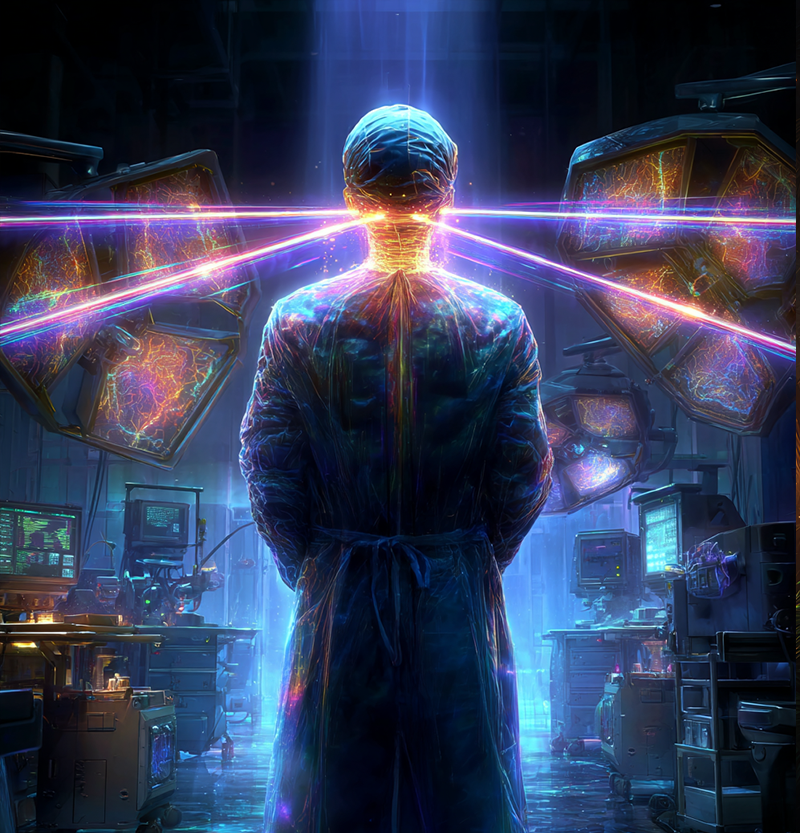
By the 20th century, Western science had reduced the senses to a sterile inventory: sight, sound, taste, touch, smell. We were told this was progress — the triumph of empiricism over superstition. But Steiner saw something else entirely. He saw amputation.
The five-sense model was not discovery. It was forgetting. A deliberate narrowing of the aperture through which human beings encounter reality — a philosophical surgery performed so gradually, so systematically, that most people never noticed what had been removed.
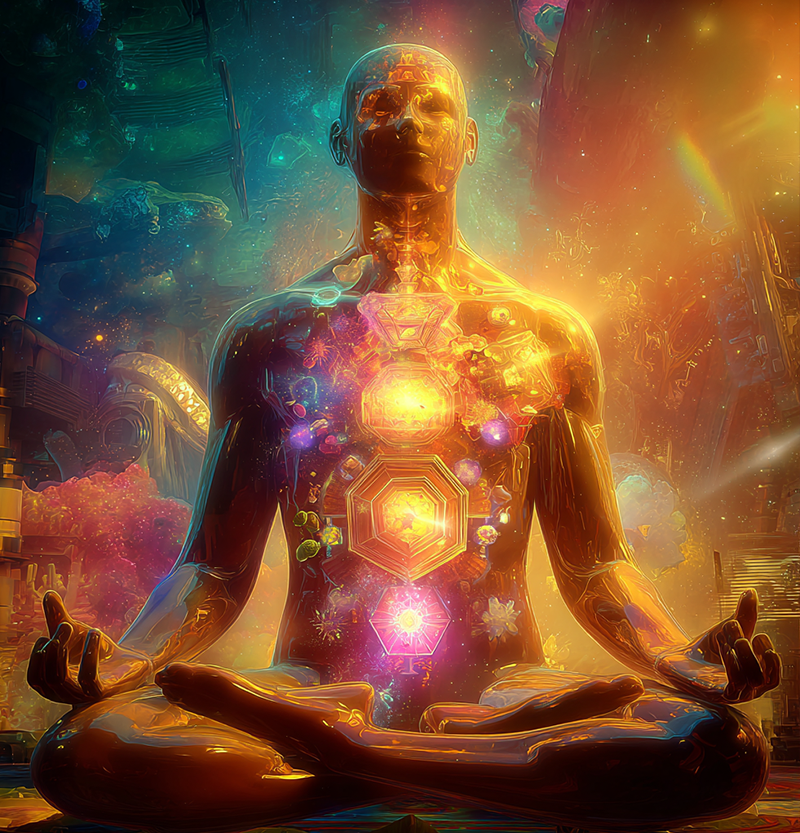
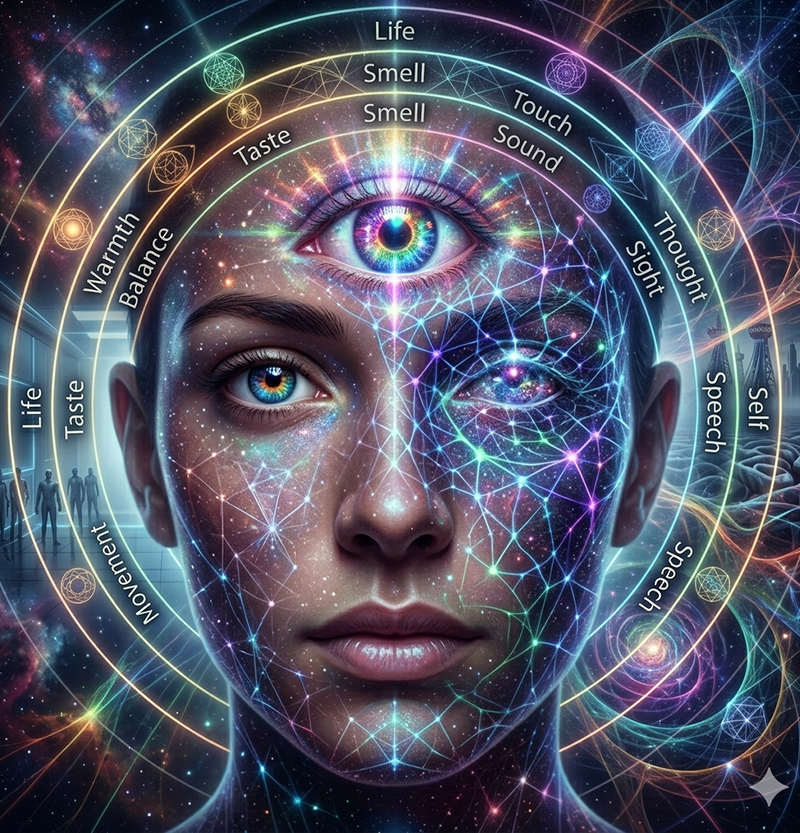
Steiner’s esoteric anatomy of perception included twelve distinct faculties, each one a genuine organ of knowing. Beyond the familiar five, he named the sense of movement — through which we feel the living motion within our own body. The sense of balance, which orients us not merely in physical space but in the felt relationship between self and world. The sense of warmth, which perceives temperature not as a measurement but as a quality, a life-quality, resonant with meaning. The sense of life itself, which registers the general tone of vitality or depletion coursing through the organism. Then the higher senses: the sense of speech, through which we hear not just sounds but intention woven into language; the sense of thought, by which we perceive — not merely infer — the living concepts present in another mind; and finally, the sense of the I, through which one human being directly encounters the spiritual selfhood of another.
These are not poetic metaphors. They are perceptual realities that most human beings have simply been untrained to notice.
What modernity did to the senses was not merely dulling — it was inversion. The outer world was amplified into a roar of data, pixels, notifications, synthetic stimulation. The inner perceptual organs — those turned toward the subtle, the living, the spiritual — were systematically starved. A person raised in modern consumer culture is, in a very precise sense, perceptually malnourished. Flooded with sensation, yet deprived of perception.
This matters because the twelve senses are not passive receivers. They are relational organs. They reach out into the world and meet it. The sense of another’s I — perhaps Steiner’s most radical gift to anthropology — does not merely observe other human beings from behind glass. It touches them, soul to soul. When this sense is atrophied, what remains is a world of objects, surfaces, performances. The living interiority of others becomes invisible, and loneliness becomes structural, not circumstantial.
The question worth asking is whether this narrowing was entirely accidental.
This was not discovery.
It was amnesia.
Steiner insisted that this model amputates the human experience.
Modernity has not only dulled these senses—it has inverted them.
And yet — something is shifting.
Across the world, individuals are reporting experiences that the five-sense model cannot account for. They feel the truth resonance behind words before they understand them intellectually. They sense spiritual dissonance in institutions long before the evidence surfaces in the news cycle. They perceive energetic signatures in people, in places, in moments — a quality of aliveness or deadness that cannot be measured but can be unmistakably felt. Children are entering the world with perceptual sensitivities that confound their parents, touching a felt dimension of reality that older generations had been taught not to trust.
This is not anomaly. It is not pathology. It may be the most significant evolutionary development of our time: the reawakening of dormant perceptual capacities in a species that was always meant to use them.
The twelve senses are not new. They are original. What is new is the cultural permission — and the urgent necessity — to reclaim them.
The restoration of the senses is not a project of acquisition but of recovery. These faculties do not need to be built from scratch; they need to be unblocked. And the conditions that unblock them are, in a sense, the inverse of those that suppressed them.
Silence is perhaps the first medicine — not merely the absence of noise, but the quality of interior stillness in which the finer senses can begin to operate. Contemplation deepens this: the practice of dwelling with a single thing, a single being, a single question long enough to begin receiving rather than merely processing. Nature immersion reactivates the sense of life and the sense of warmth in ways that no indoor practice can fully replicate, because the natural world is itself a perceptual field — sentient, responsive, communicative to those who approach it with open faculties.
Dreamwork reopens the nocturnal dimension of perception, the threshold states in which the higher senses operate less obstructed by the trained habits of waking consciousness. Embodied presence — genuine inhabitation of the physical body, not as a vehicle but as a sensing instrument — restores the somatic senses from the inside. Truthful speech is not merely an ethical practice; it is a perceptual one, because the sense of speech, directed inward, begins to register the gap between what one says and what one knows to be true. Artistic creation demands and develops the perceiving eye, the listening ear, the feeling hand. And spiritual discipline — whatever form it takes — provides the scaffolding through which temporary openings become stable, integrated capacities.
None of these are shortcuts. All of them are paths.
These practices re-open perceptual faculties long dormant.
The cultural narrative of the future has long been technological: we will extend perception through machines, through algorithms, through augmentation. We will see farther, hear more, process faster. But this is an intensification of the five-sense paradigm, not a transcendence of it. It makes the outer world louder without making the inner world deeper.
Steiner’s vision points in the opposite direction. The future human being is not more wired — they are more awake. Not more surveilled — more perceptive. Not more connected to networks — more directly present to other souls. The twelve senses, fully restored and consciously developed, constitute nothing less than a new mode of being human: one that can navigate complexity without being overwhelmed by it, because the navigation is not merely cognitive but perceptual, not merely analytical but participatory.
To reclaim the twelve senses is to reclaim a birthright: a reality that is rich, layered, multidimensional, and alive — not as a mystical aspiration, but as the actual texture of existence available to a fully-developed human being.
We are not here to transcend the senses. We are here to complete them. For only a fully-sensed human can navigate a fully-awake world.
**For a deeper immersion into this living knowledge, we warmly invite you to watch Dr. David and Kim Martin’s illuminating lecture on the Twelve Senses, available now in the Lazarus Symposium Archive.